What read aloud practice actually trains
When you read aloud, your mouth, ear, and attention have to work together at the same time. That combination is what makes the exercise different from silent reading. Silent reading builds vocabulary and comprehension, but it gives your speech system no repetitions. A word you recognize instantly on the page can still come out slowly, with the wrong stress, or with a sound you have never actually produced.
Read aloud practice develops four things at once:
- Pronunciation accuracy — you hear which sounds collapse when you speak quickly.
- Intonation and rhythm — question forms, emphasis, and sentence stress turn into physical habits.
- Chunking and fluency — you learn to carry a phrase across several words instead of stopping at each one.
- Confidence — your own voice sounds less strange to you, which lowers the hesitation that holds back speaking.
None of these improve from one session. They improve from short repetitions spread across days. That is why the routine below is deliberately small.
How to do read aloud practice step by step
Pick a passage slightly above your comfort level
Choose about 100 to 150 words from a graded reader, a news brief, or a dialogue from your course. The best passage contains mostly familiar vocabulary plus two or three words you can almost say. If every sentence is easy, you are rehearsing what you already own. If half the words are new, you will spend the session decoding instead of speaking.
Mark the passage before you speak
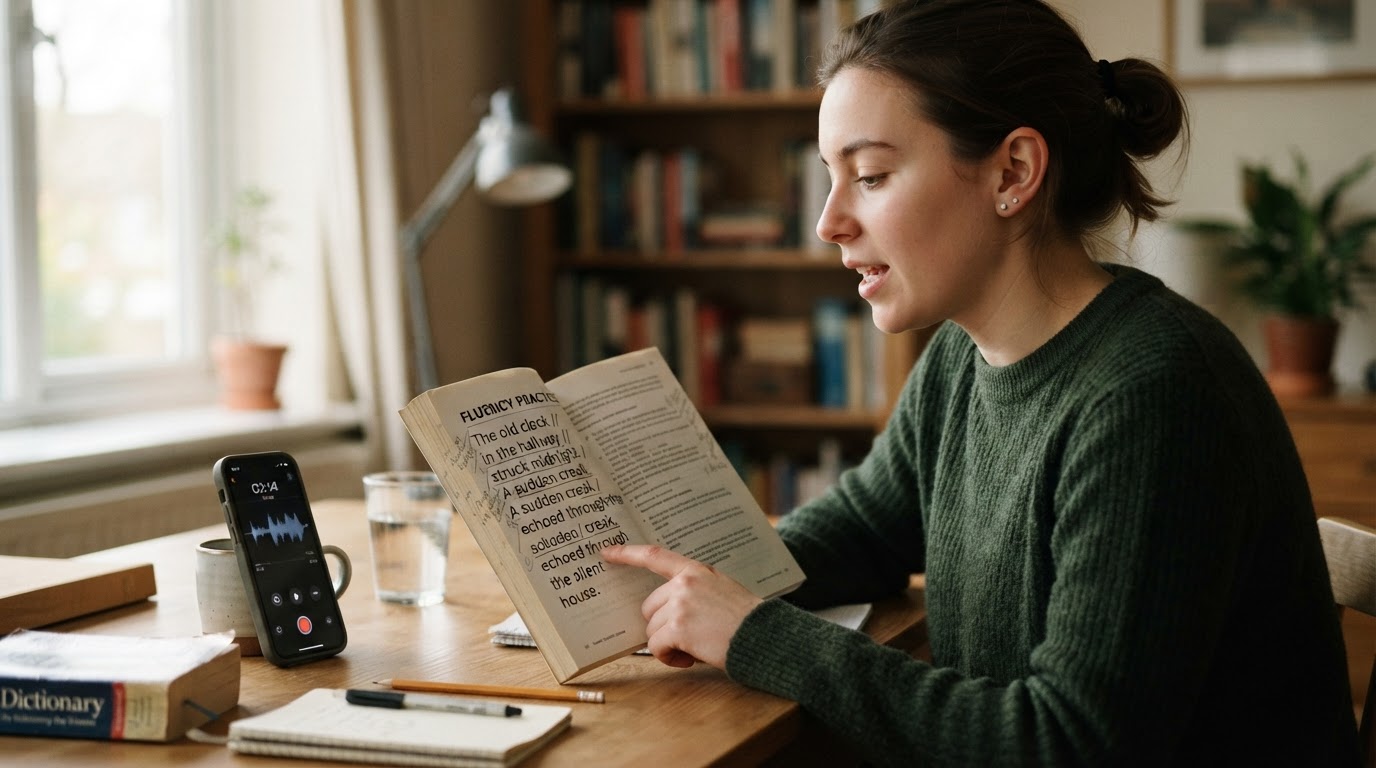
Read the passage silently once with a pencil in hand. Circle the words you cannot pronounce confidently, draw a slash where a pause feels natural, and underline the word you think should carry the stress in each sentence. This 30-second pass removes most of the hesitation that makes a first read sound rushed.
Speak in phrase groups, not single words
Read aloud in groups of three to seven words that belong together: "when I got to the station / I realized / I had left my ticket at home." Chunking is how fluent speakers keep a steady rhythm. Word-by-word reading sounds choppy even when every individual sound is correct.
Record yourself and listen once
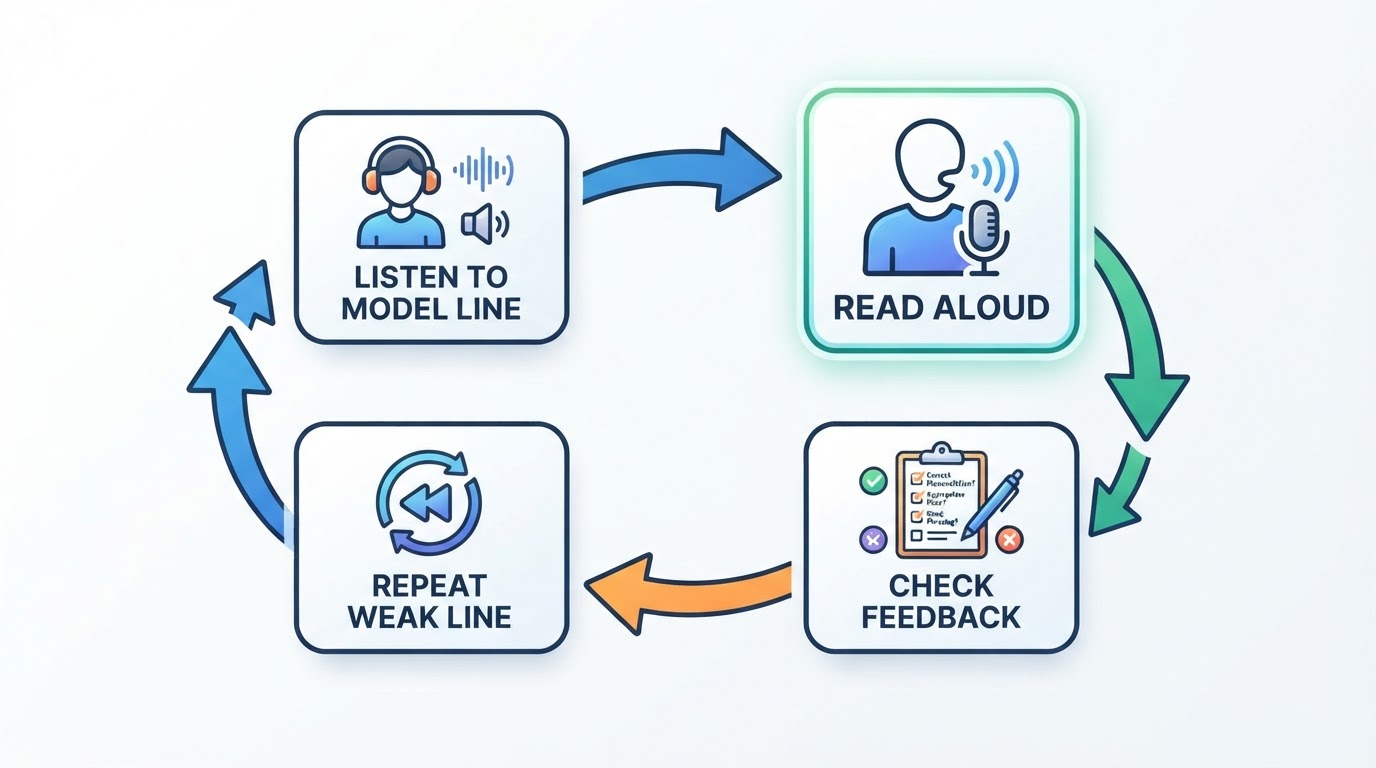
Record one pass on your phone, then listen without judging your accent. Ask three concrete questions: Did the listener-facing words land clearly? Did my pitch move, or stay flat? Did I slow down in the hard parts? One recording per session is enough, and you do not need to keep it.
Repeat only the lines that slipped
Do not restart the whole passage every time something goes wrong. Take the two or three lines that stumbled and read just those lines three times. Focused repetition fixes a specific phrase much faster than rereading everything.
Common mistakes that slow progress
Reading fast to sound fluent
Speed is a side effect of fluency, not a shortcut to it. When you rush, sounds merge and word endings disappear. Read at a pace where you can finish every word, then let speed arrive on its own after repetition.
Practicing only in silence
Silent reading cannot correct a sound you have never made. Spend at least part of the session with your voice on, even if it is only a whisper.
Trying to fix every sound at once
If you chase every difficult sound in a single session, none of them get enough repetitions. Choose one target for the week — word endings, one vowel pair, or sentence stress — and let everything else be good enough for now.
Turning practice into an occasional marathon
A 40-minute session once a week gives you about 40 minutes of speaking. Five minutes a day gives you 35 minutes a week, spread across seven chances to correct the same habits. Short and frequent wins because the skill is physical.
A simple 3-5 minute daily routine
Time | What to do | Quick check |
|---|---|---|
0:00-0:30 | Read the passage silently and mark pauses, stress, and hard words | You can say what the passage means in one sentence |
0:30-1:30 | Read the first half aloud in phrase groups | Phrases stay connected instead of breaking word by word |
1:30-2:30 | Read the second half aloud at the same steady pace | You finish endings and do not speed up in easy parts |
2:30-3:30 | Re-read the two weakest lines three times each | The line stops stumbling by the third pass |
3:30-5:00 | Record the full passage once and listen back | Your intonation is clearer than on the first read |
If you only have three minutes, keep the middle steps and the final recording. The loop matters more than the total time.
Where instant feedback fits
The hardest part of read aloud practice is knowing whether you actually said what you meant to say. Your ear adjusts to your own habits, so problems such as a swallowed ending or a flat question form are easy to miss. A teacher or a patient friend can catch them, but few learners have someone available every day.
Speech-to-text scoring tools fill part of that gap. The idea is simple: the tool converts your speech into text or a score, then shows how closely your pronunciation matched the expected words. Because the feedback arrives right after you speak, you can correct the same line while the memory of it is still fresh. For learners who feel self-conscious speaking in front of people, private AI-graded practice also removes the audience problem.
MANA Learn is one example of this approach. The free AI language learning app includes pronunciation practice built on speech-to-text scoring that is designed to check spoken accuracy, so you read aloud and receive feedback on your pronunciation. The practice is meant to sit inside short daily sessions, which is the same structure this article recommends: a few minutes of speaking, immediate feedback, and then one more pass at the lines that need work. Treat it as one option among many — whichever tool you use to hear yourself, the routine above is what produces the progress.
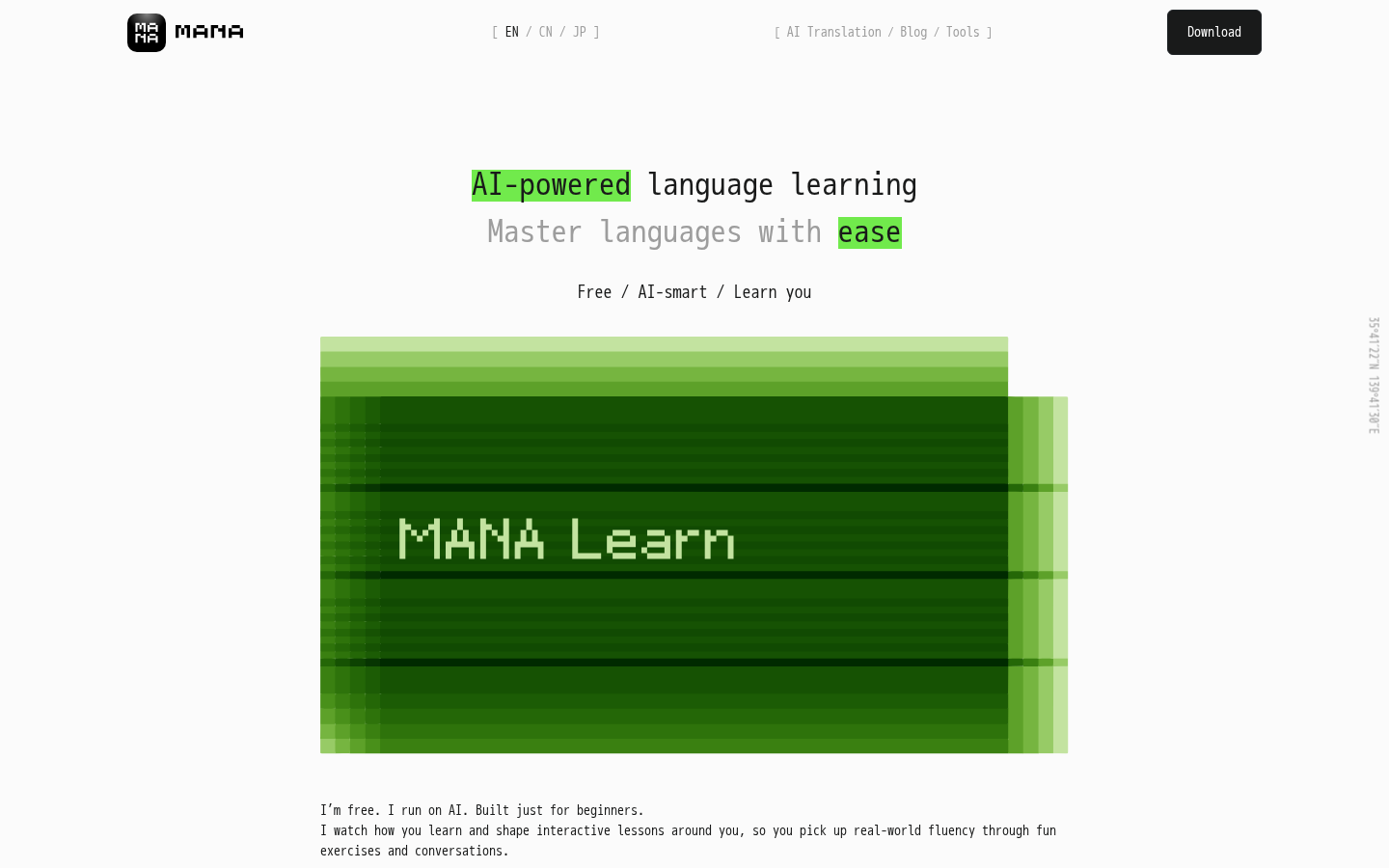
Felo product screenshot.
FAQ
How long should read aloud practice take?
Aim for three to five minutes a day. That is enough to read a short passage, work on two or three problem lines, and finish with one recorded pass. Longer sessions help only if you can repeat them, so consistency matters more than duration.
What should I read aloud?
Choose material you can mostly understand, in complete sentences rather than word lists: a graded reader, a short news article, a dialogue from your textbook, or a scene from a novel you enjoy. Read the same passage for several days before moving to a new one.
Should I read the same passage more than once?
Yes. Repetition is where the improvement happens. The first read shows you the problems, and the later reads teach your mouth the corrected version. Three to five passes over one short passage beats a single pass over five different passages.
Can I practice read aloud without a teacher?
You can. Record yourself, use a speech-to-text tool as an outside check on pronunciation, and compare your read against a clear audio model when one is available. A teacher is valuable for diagnosing persistent problems, but daily practice does not depend on having one.
Does reading aloud help with listening?
It helps indirectly. Producing a sound teaches you what to listen for, and hearing your own recording trains attention to rhythm and stress. If listening is your main goal, pair the read-aloud loop with separate listening practice.
The takeaway
Read aloud practice does not need a large block of time or a perfect accent goal. It needs a short passage, your voice, and a feedback step you actually use. Read the passage aloud, check one thing — clarity, word endings, or intonation — and repeat only the lines that slipped. Five minutes today is worth more than a perfect plan for next week.