What a pronunciation score actually measures
A pronunciation score is not one number that means one thing. Apps that use speech-to-text scoring typically compare what you said against a model of the target language, then report on several dimensions at once. Some weight individual sounds heavily; others pay more attention to stress, rhythm, and intonation. That is why the same recording can produce different results in two different apps, and why "improving your score" is really a question about which dimension is failing.
Accuracy, stress, and intonation are separate skills
Most scoring systems are looking at a mix of:
- Sound accuracy — whether each consonant and vowel lands close to the expected pronunciation.
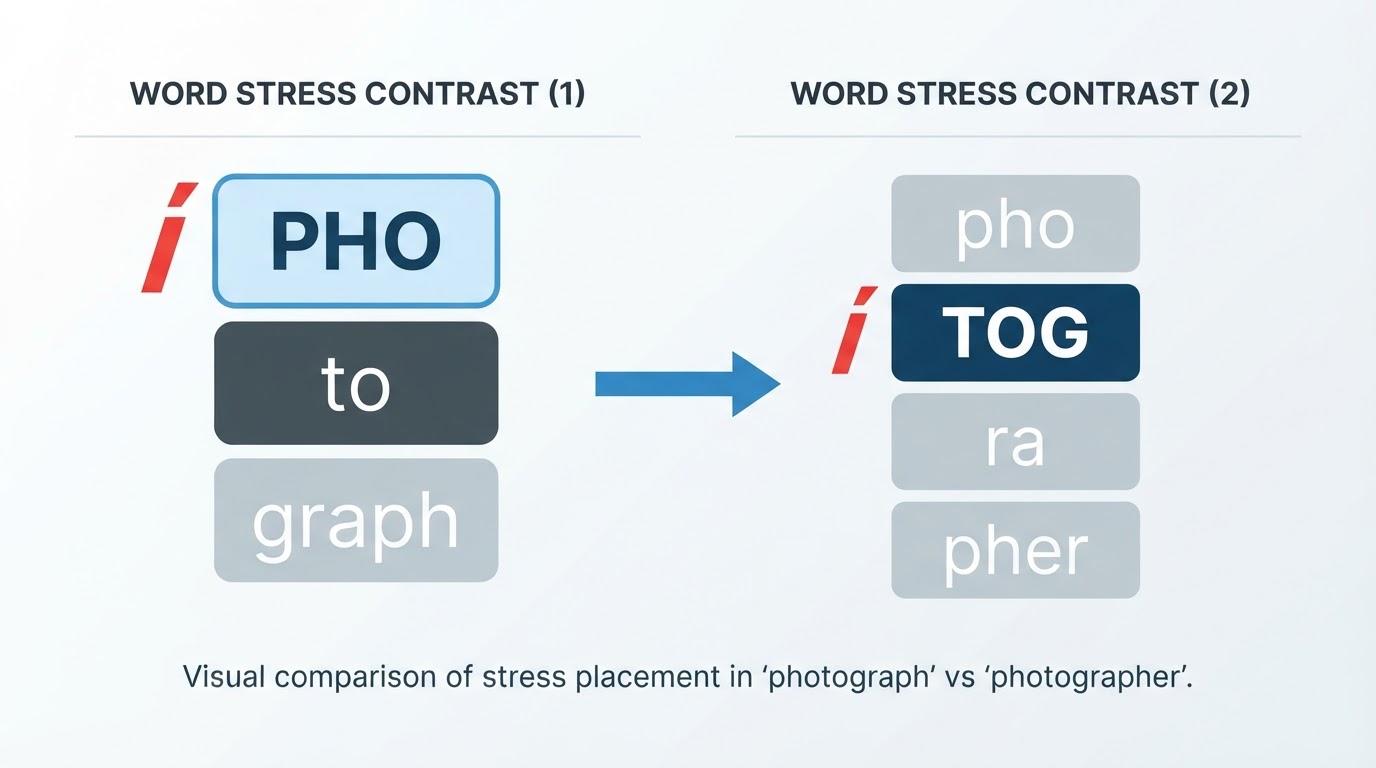
- Word stress — whether the strong syllable in each word is in the right place and long enough.
- Rhythm and intonation — whether the sentence has the right pulse and the pitch moves the way listeners expect.
- Fluency — whether you pause, restart, or slow down in places that interrupt meaning.
These skills improve at different speeds and through different drills. If you spend every session on isolated sounds but your real problem is flat intonation, your score will keep disappointing you. So the first move is diagnostic: speak one sentence, read the feedback, and decide which dimension is weakest before you practise anything.
Scores are tool-specific, so compare yourself with yourself
Each app trains its model on its own data, sets its own scoring thresholds, and handles your microphone in its own way. The same recording can score differently from one tool to the next, and that gap is not a measure of your progress. Pick one scoring tool, practise with the same microphone in the same place, and watch the direction of your scores across several weeks instead of the absolute number. A slow upward trend inside one tool is real evidence. A jump that appears only after you switch apps is noise.
How instant AI feedback changes the practice loop
Feedback is worth most when it arrives immediately. If you hear that a word came out wrong ten seconds after you said it, you can correct it while the sentence is still fresh. If you wait until a tutor reviews your recording next week, you have probably repeated the same error dozens of times in between.
What instant scoring gives you
A speech-to-text based scorer gives you three things that are hard to get alone: a consistent verdict that does not depend on a friend's patience, a private place to repeat the same line until it improves, and a record of which words keep failing. Beginners who feel self-conscious about speaking often find this easier than practising in front of another person, and busy learners can fit it into gaps that would otherwise go unused.
One concrete example of that loop in practice is MANA Learn. Its pronunciation scoring practice is described as speech-to-text scoring built into the lesson flow: you read a line aloud and receive immediate feedback on pronunciation quality and intonation, without opening a separate recording screen. For a learner who wants scored speaking repetitions inside short daily sessions, that setup matches the criteria above — private, instant, and repeatable.
Felo product screenshot.
What instant scoring cannot tell you
An AI score is a signal, not a verdict. Microphone quality, background noise, and unusual vocabulary can all move the number without your pronunciation changing. Most automatic scorers also simplify the messy reality of connected speech, so a good score cannot prove that a human listener will understand every word, and a mediocre score does not mean you were unclear. When a score surprises you, record yourself, listen back, and trust your ears alongside the number. If you are preparing for a specific exam or interview, a human teacher can still catch things a scoring model was not trained to hear.
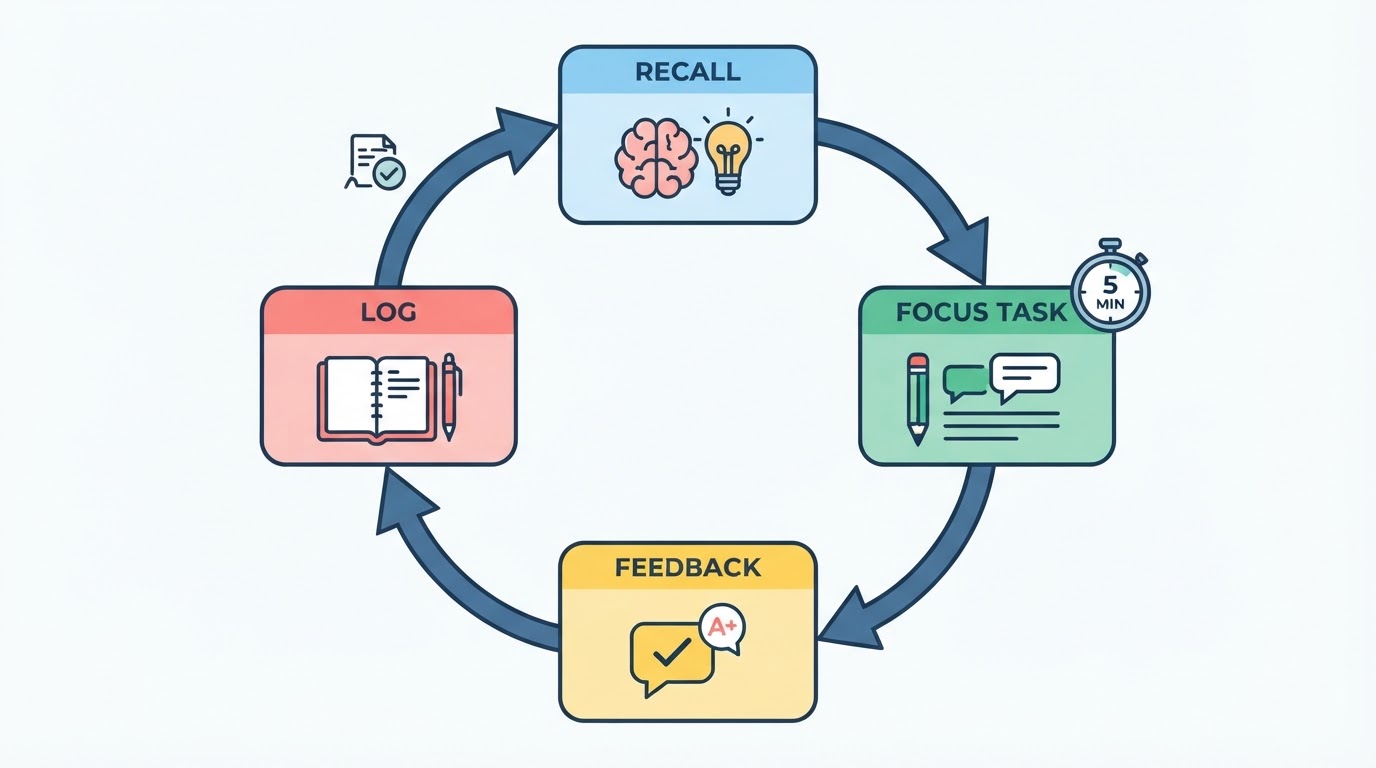
The 3-5 minute daily practice loop
Five minutes a day, done the same way, moves a score faster than an hour once a week. The loop below turns scoring feedback into practice instead of a report card.
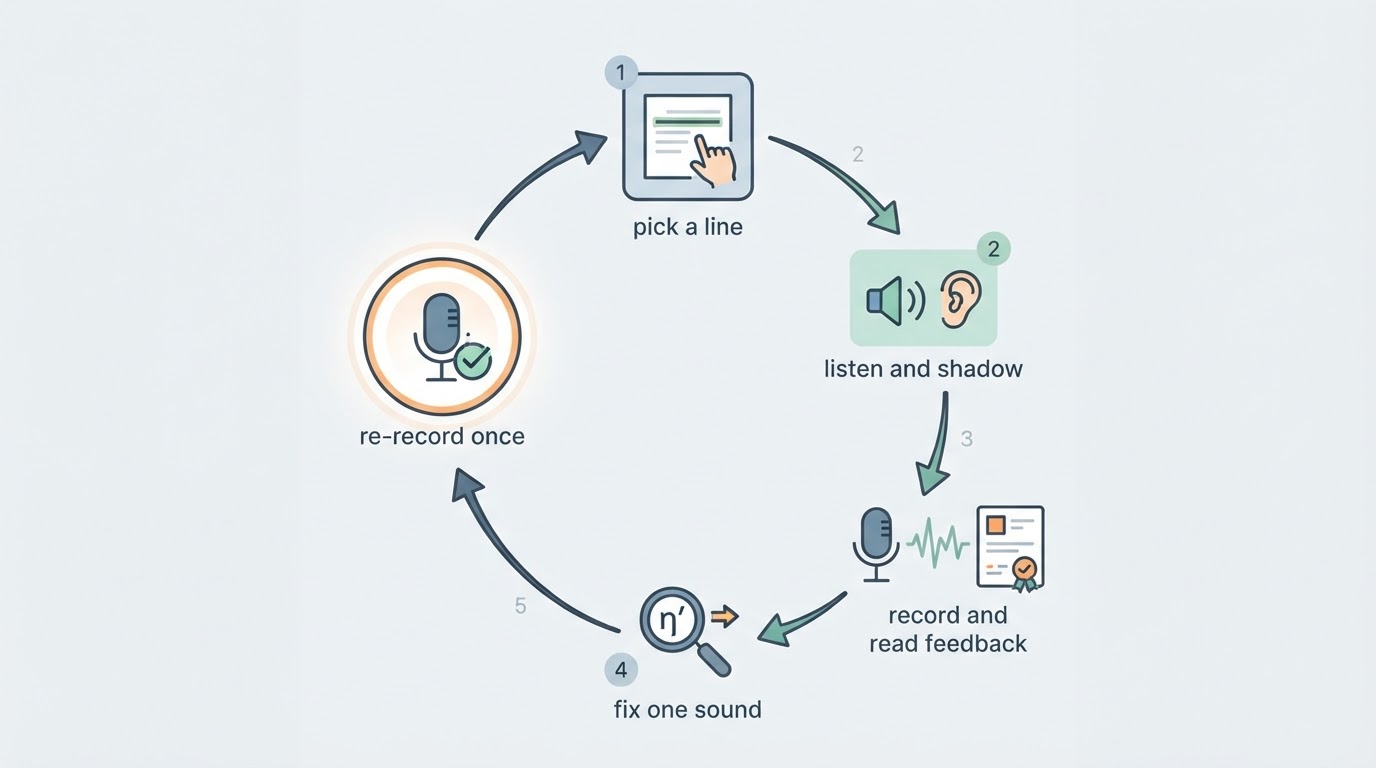
Step 1: Choose one short line at your level
Pick a single sentence you already understand — something from a lesson, a phrase book, or the last thing you listened to. It should contain at most one or two words you cannot say comfortably. Short lines let you repeat the whole phrase often enough to notice changes; long paragraphs hide the one sound that keeps failing.
Step 2: Listen and shadow before you record
Play the line two or three times. Then shadow it: speak along with the audio, a beat behind, without recording. Shadowing warms up your ear and your mouth at the same time, and it gives you a reference for the rhythm you are about to attempt.
Step 3: Record once and read the feedback by dimension
Record the line once at a natural pace. Do not stop to correct yourself mid-sentence — your goal is an honest sample, not a clean take. Then read the feedback the same way every day: is the problem a single sound, one word, or the shape of the whole sentence? Name the failure in one short phrase, such as "the vowel in 'ship'" or "stress on the second syllable".
Step 4: Isolate one failing sound
Take the failing sound out of the sentence and slow it down. Say it alone several times, then inside its word, then inside the full phrase. Exaggerating the movement at first is fine; the point is to feel the difference between your habit and the target. If the problem is stress or intonation, clap or tap the rhythm while you speak — a physical beat makes the pattern harder to rush.
Step 5: Re-record once, then stop
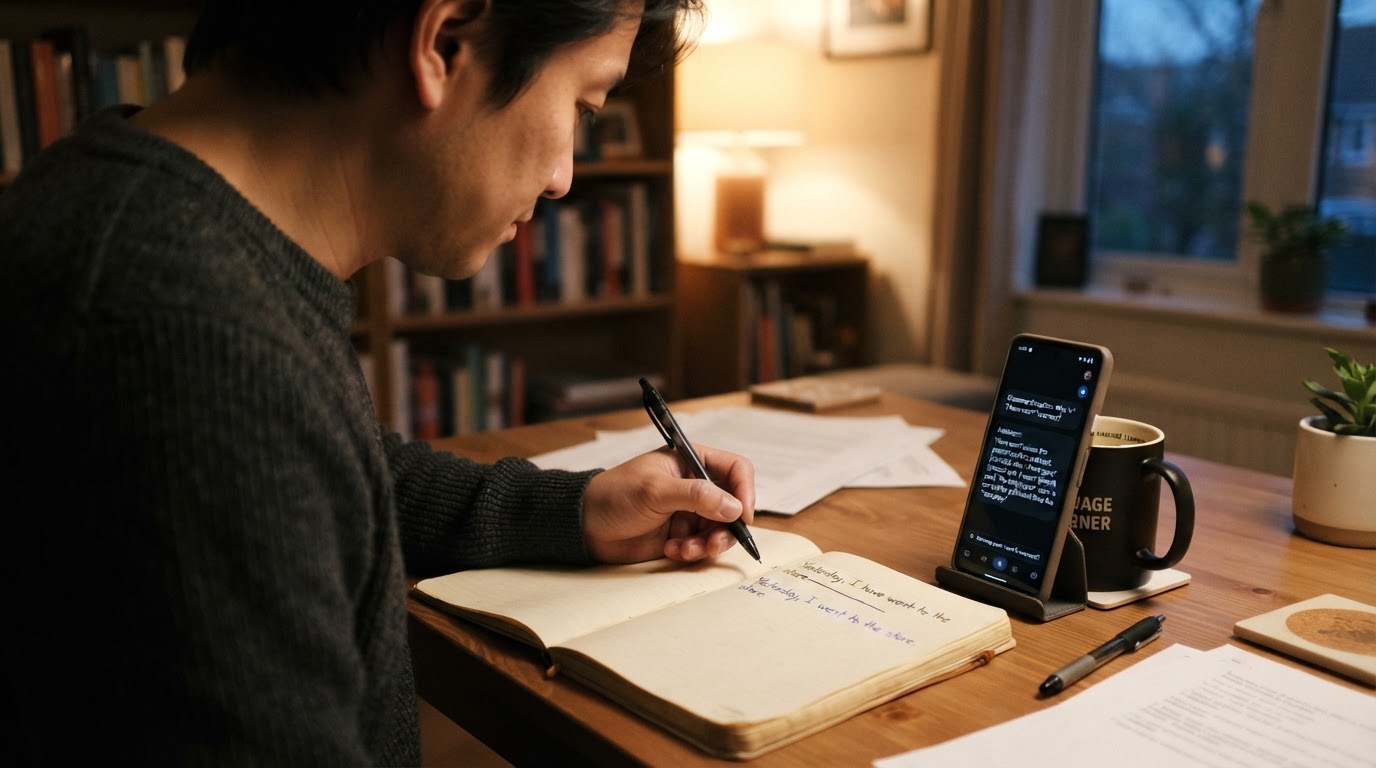
Record the same line one more time and compare the two takes. Your session is finished when the second take is clearly better on the dimension you targeted, or after two deliberate attempts, whichever comes first. Write down three things: the line, the one sound you worked on, and the score. That log is what turns five scattered minutes into a trend you can actually read.
Common mistakes that keep scores flat
Mistake | Why it hurts | Better move |
|---|---|---|
Listening to a language all day but rarely speaking | Recognising a sound is a different skill from producing it | Spend at least half of each session with your own voice |
Practising in marathon sessions once a week | Long gaps erase the correction you just trained | Keep the loop short and daily, even at three minutes |
Rushing new vocabulary into full-speed sentences | You rehearse the error instead of the target | Slow the word down until it is accurate, then build speed |
Chasing the number instead of the sound | Scores wobble with noise, microphones, and content | Judge one dimension per session and ignore the rest |
Switching between scoring apps | Each tool measures differently, so the trend breaks | Stay with one tool for a month before judging progress |
Practising in a noisy kitchen or on a train | Noise distorts both your model and your feedback | Use a quiet room and a consistent microphone position |
Never returning to old lines | Improvement fades when a sound leaves your practice list | Re-record yesterday's line at the start of the next session |
One habit sits underneath all of these: keep the sample honest. A high score on an easy line teaches you nothing, while a shaky score on a slightly hard line tells you exactly where the next five minutes should go.
FAQ
How often should I practise pronunciation?
Daily beats occasional, and short beats long. Three to five focused minutes with one scored line is enough to keep a correction alive. If you can add a second session, make it a different time of day so the practice becomes part of your routine rather than an event you have to remember.
How long does it take to see a better pronunciation score?
Treat scores as a trend, not a step. A single sound you drill on purpose often audibly improves within a few sessions, while stress, rhythm, and intonation tend to move more slowly because they involve longer stretches of speech. Judge progress by comparing the same line two weeks apart, not by whether today's number beat yesterday's.
Are AI pronunciation scores accurate?
They are consistent and useful, but they are not the same as a human listener. Automatic scoring works best when it can hear you clearly and when the material matches what the model was built to evaluate. Use the score to direct your practice, then confirm with your own ear by listening to the recording you just made.
Do I still need a human teacher?
Not for daily repetitions — that is exactly the job instant feedback does well. A teacher is still valuable for the parts a scoring model handles poorly: explaining why a sound keeps slipping, shaping intonation for a specific audience, and judging whether you sound natural in a real conversation. Use the tool for volume and the teacher for nuance.
What if my score drops after a good session?
First check the boring explanations: a different room, a different microphone position, or a harder line. If the setup is the same, a dip usually means you attempted something more difficult than yesterday, which is not a setback. Log it, keep the same line for one more session, and compare again before you change anything.
The one habit that matters most
Improvement here is boring on purpose. Choose one line, listen, speak it aloud, read the feedback by dimension, fix a single sound, and re-record once — then stop and write down what happened. Do that for two weeks with the same tool and the same quiet corner, and your scores stop being a mystery number you check and become feedback you use.
Pick your line for tomorrow now. That is the whole trick.